Picture this: you’ve just spent a weekend watching motorsport highlights, and suddenly your stock sedan feels like a rolling appliance. You start browsing aftermarket parts — a louder exhaust here, a flashier spoiler there — and before you know it, you’re deep in a rabbit hole of modifications that could either make your car a dream machine or land you with a hefty fine at your next inspection. Sound familiar? You’re not alone. Car tuning culture has exploded globally, and in 2026, the rules surrounding what’s legal and what’s not have evolved significantly alongside EV adoption and tightening emissions standards. Let’s think through this together — carefully and practically.

🔧 What Is Car Tuning, Exactly?
“Tuning” broadly refers to any modification made to a vehicle beyond its factory specification. This includes performance tuning (engine, suspension, brakes), aesthetic tuning (body kits, vinyl wraps, custom wheels), and electronic tuning (ECU remapping, software updates). The distinction between legal and illegal tuning typically hinges on three pillars: safety standards, emissions compliance, and type approval regulations — which vary significantly by country.
📊 The Global Tuning Market in 2026: Bigger Than Ever
According to the 2026 Global Automotive Aftermarket Industry Report, the worldwide car modification market is valued at approximately $560 billion USD, up nearly 18% from three years ago. Interestingly, EV-specific tuning (battery performance mods, regenerative braking calibration) now accounts for roughly 12% of all aftermarket activity — a segment that barely existed a decade ago. This growth has pushed governments to update their regulations, sometimes lagging behind the actual technology available on the streets.
✅ Generally Legal Modifications (With Caveats)
Here’s where things get nuanced. Most countries draw a line between modifications that are cosmetic and reversible versus those that alter fundamental safety or environmental performance. The following are broadly considered legal in most jurisdictions, though always verify with your local transport authority:
- Window tinting — Legal in most places, but VLT (visible light transmission) percentages are strictly regulated. In the US, front side windows typically must allow 35–70% light depending on the state. In South Korea, 35% or above is required for front windows.
- Aftermarket wheels — Permitted as long as the wheel size doesn’t dramatically alter speedometer accuracy or foul wheel arches. Oversized wheels that affect ABS calibration can become a gray area.
- Cold air intakes — Generally legal in most regions, though California’s CARB (California Air Resources Board) requires an EO (Executive Order) number for compliance.
- Suspension lowering (within limits) — Most countries allow a reduction of up to 30–40mm from factory height before it triggers a re-inspection requirement.
- Vinyl wraps and paint changes — Legal nearly everywhere, but some jurisdictions require you to notify the vehicle registration authority of a color change.
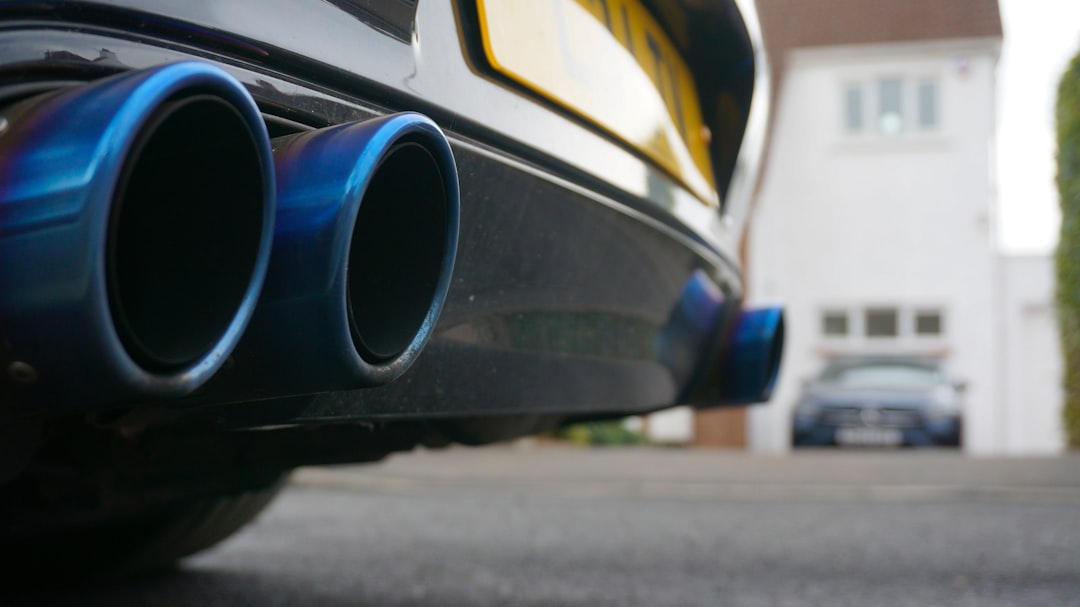
- Cat-back exhaust systems — Modifications made after the catalytic converter are generally permissible, as long as noise limits (typically 74–80 dB depending on region) are respected.
- Cosmetic body kits — Permitted if they don’t protrude dangerously beyond the car’s original body lines or obscure lighting and license plates.
🚫 Commonly Illegal Modifications — Don’t Get Caught
- ECU remapping that defeats emissions controls — This is a major red flag in 2026. Under the EU’s updated Euro 7 standards and South Korea’s 대기환경보전법 (Clean Air Conservation Act), tampering with emissions-related software is now subject to fines up to €30,000 in the EU.
- Straight-pipe or de-cat exhaust systems — Removing the catalytic converter is illegal in virtually every developed nation and can result in immediate vehicle impoundment in Germany and South Korea.
- HID/LED conversion in housings not designed for them — Creates dangerous glare for other drivers. Illegal without proper projector housing upgrades in most of Europe, Japan, and Korea.
- Nitrous Oxide (NOS) systems for road use — Universally illegal on public roads, though permitted on closed circuits.
- Altered VIN or odometer tampering — Not just a tuning issue; this is criminal fraud in every jurisdiction.
- Overly tinted windshields — Even 20% tint on a front windshield is illegal almost everywhere globally.
- Underglow lighting while moving — Most countries restrict neon/LED underglow to stationary display only; using it while driving is treated as a distraction hazard.
🌍 How Different Countries Handle Tuning: Real-World Examples
United States: The US operates on a state-by-state patchwork, but the federal Clean Air Act draws a hard line on emissions tampering. California remains the strictest, with CARB certification required for most performance mods. Texas, by contrast, has relatively relaxed standards — a reason many American tuners are based there.
Germany: Germany is fascinating — the birthplace of the Autobahn has surprisingly strict modification rules. The Straßenverkehrs-Zulassungs-Ordnung (StVZO) requires that almost any structural modification receive a TÜV (technical inspection) stamp. However, Germans embrace this culture — TÜV-certified performance builds are a badge of honor. Wide-body kits, for instance, require individual technical approval and are not simply bolt-and-go propositions.
Japan: Japan’s Shakin (vehicle inspection) system is rigorous. Modifications must comply with JDM standards and be registered. Interestingly, Japan has one of the world’s most sophisticated legal tuning ecosystems — companies like HKS and Cusco produce inspection-compliant parts specifically designed to pass Shakin. The culture respects the law but engineers around it brilliantly.
South Korea: Under the 자동차관리법 (Motor Vehicle Management Act), structural modifications require prior approval from the Korea Transportation Safety Authority (KOTSA / 한국교통안전공단). Since 2023, enforcement has intensified — unauthorized spoilers, body kit extensions beyond 30mm, and suspension modifications exceeding regulated limits are being flagged at periodic inspections (정기검사). Fines start at ₩500,000 and can escalate to criminal referral for repeat offenders.
United Kingdom (post-Brexit): The UK now operates under its own DVSA framework, partially mirroring EU standards but with some divergence. An MOT test failure for illegal mods results not just in fines but potential insurance invalidation — a serious financial risk.
🔌 The EV Tuning Gray Zone in 2026
One of the fastest-moving legal frontiers right now is electric vehicle tuning. Can you legally remap an EV’s motor controller to unlock more power? In most countries, the answer is no — for the same reason ICE ECU tampering is banned. However, “subscription-based performance unlocking” offered directly by manufacturers (like certain Tesla over-the-air performance boosts or Hyundai’s N Performance packages) occupies a legal safe harbor because the manufacturer controls the modification. Third-party EV remapping remains largely uncharted — and therefore high-risk — territory.
💡 Realistic Alternatives: How to Tune Smart in 2026
So what if you want a more exciting drive without risking fines, failed inspections, or voided insurance? Here are practical paths forward:
- Choose manufacturer-approved performance packages — Many OEMs now offer factory-tuned variants (BMW M Performance, Hyundai N Line, Toyota GR accessories) that are fully legal and warranty-preserving.
- Use certified aftermarket brands — Look for parts with CARB EO numbers (US), TÜV certification (Germany), or KOTSA approval (Korea). Yes, they cost more, but the peace of mind is worth it.
- Join a car club or track day program — Save your aggressive mods for track-only builds. A dedicated track car can be tuned far beyond road-legal limits, legally.
- Consult a licensed tuning shop — In 2026, reputable shops will walk you through the paperwork, not just the parts. If a shop skips compliance conversation entirely, that’s a red flag.
- Document everything — Keep receipts, certification numbers, and approval documents in the glovebox. During an inspection, paperwork is your best friend.
🎯 Quick Reference: Legal Check Before You Mod
Before pulling the trigger on any modification, ask yourself these five questions:
- Does this modification require a re-registration or notification to the transport authority?
- Does it affect emissions-related systems (catalytic converter, O2 sensors, DPF)?
- Will it cause the vehicle to fail the next periodic safety inspection?
- Could it void my insurance policy or affect my liability in an accident?
- Is the part certified for road use in my specific country/state/region?
If you answer “yes” to any of the first four, proceed with extreme caution or consult a legal automotive specialist first.
Editor’s Comment : Here’s the honest truth — the line between legal and illegal tuning isn’t always a bright red line. It’s often a blurry gradient that depends on your jurisdiction, the specific part, and even how strictly your local inspection station interprets the rules. The smartest tuners I know in 2026 aren’t the ones with the loudest exhausts or the most aggressive ECU maps — they’re the ones who know the rules inside out and push right up to the legal edge with documentation to back them up. Tune smart, tune legal, and enjoy the ride without the courtroom drama.
태그: [‘car tuning legal illegal 2026’, ‘aftermarket modifications law’, ‘ECU remapping legality’, ‘car inspection modifications’, ‘illegal car mods guide’, ‘automotive tuning regulations’, ‘EV tuning laws 2026’]
Leave a Reply