A friend of mine — let’s call her Mia — bought a shiny new electric vehicle back in early 2024. At the time, everyone told her she was making a smart financial move. Fast forward to today in 2026, and she’s genuinely thrilled… but not entirely for the reasons she expected. The savings on fuel? Absolutely real. The reduced maintenance headaches? Also real. But there were a few surprises along the way — battery health checks, tire wear rates, and the occasional software update that felt more like a car update than a phone update. So let’s sit down together and actually crunch through the numbers, compare real-world scenarios, and figure out what makes sense for your specific situation in 2026.
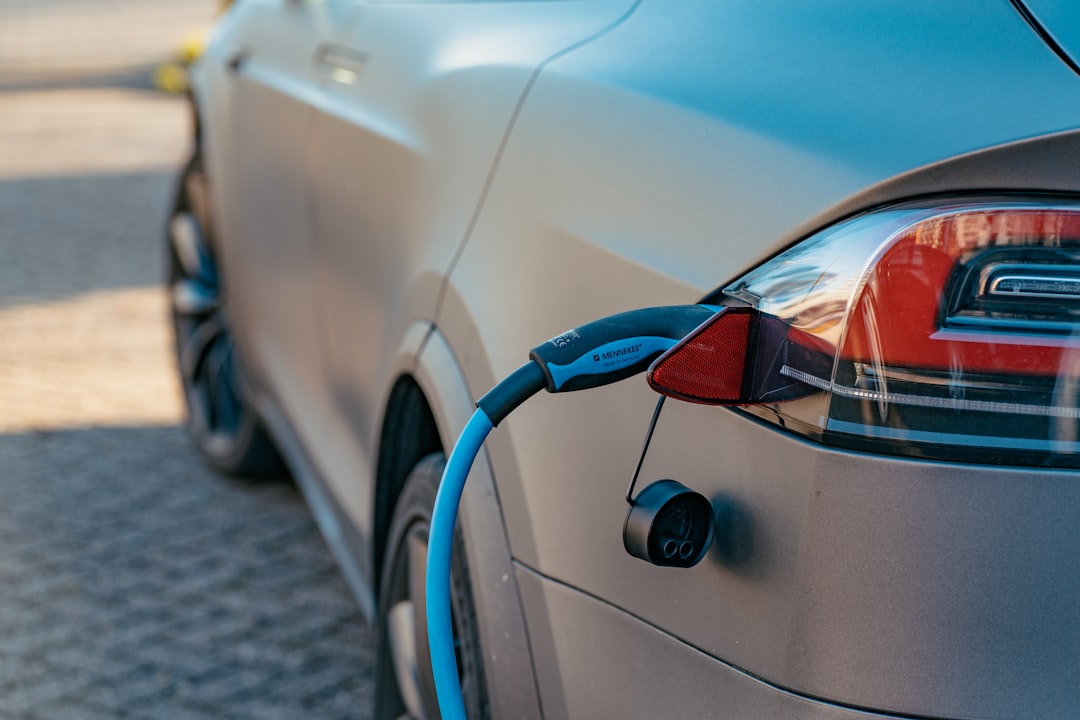
Breaking Down the Annual Maintenance Costs: EV vs ICE
Let’s start with the cold, hard data — because feelings about cars are one thing, but your wallet is another. Based on aggregated data from AAA, Consumer Reports, and industry reports available through early 2026, here’s how the two categories typically stack up annually:
- Internal Combustion Engine (ICE) vehicles: Average annual maintenance cost sits around $1,200–$1,800 USD per year, factoring in oil changes (every 5,000–7,500 miles), air filter replacements, spark plug changes, transmission fluid, and brake services.
- Electric vehicles (EVs): Average annual maintenance cost lands closer to $600–$900 USD per year — roughly 40–50% less — primarily covering tire rotations, brake fluid checks (though regenerative braking dramatically extends brake pad life), cabin air filters, and coolant system checks for the battery thermal management.
- Fuel/Energy costs: In the U.S. in 2026, average gasoline hovers around $3.60–$4.10/gallon depending on region, while charging an EV at home costs the equivalent of roughly $1.10–$1.40 per gallon equivalent. The gap remains significant.
- Battery replacement: This is the wildcard. While most modern EVs (2022 onward) come with 8–10 year battery warranties, an out-of-warranty replacement can still run $8,000–$15,000 depending on the vehicle. However, battery degradation rates have improved dramatically — many 2023–2025 EVs show less than 5% capacity loss after 100,000 miles.
Where ICE Vehicles Still Bleed Your Budget
Here’s something people underestimate: it’s not the big repairs that kill you with gas-powered cars — it’s the accumulation of routine costs. Think about this logically: a modern ICE engine has somewhere between 2,000 and 3,000 moving parts. An EV’s drivetrain? Closer to 20. Fewer parts = fewer failure points = fewer trips to the mechanic. Oil changes alone — if you drive an average of 15,000 miles per year — can cost $600–$900 annually when you factor in synthetic oil pricing in 2026. Add in coolant flushes, transmission services, and the inevitable timing belt or chain service around the 100,000-mile mark, and the costs compound quietly but consistently.
Real-World Examples: U.S., Europe, and South Korea
Let’s look at how this plays out in different markets, because context matters enormously here.
🇺🇸 United States (Texas vs. California): In Texas, where home electricity rates average around $0.12/kWh in 2026, EV owners report spending roughly $50–$70/month on charging for typical commutes. Compare that to $180–$220/month on gasoline for a comparable ICE sedan. California EV owners face higher electricity rates (~$0.28/kWh in some areas) but offset this with HOV lane access and state rebates still available in 2026 under extended clean vehicle programs.
🇩🇪 Germany: Germany’s high electricity prices (~€0.38/kWh in 2026) complicate the EV math significantly. German drivers with home solar panels or corporate charging benefits still win, but pure grid-charging EV owners see a narrower fuel-cost advantage over their diesel-powered counterparts. Maintenance savings remain consistent, however, since labor costs for ICE-specific services in Germany are notoriously high.
🇰🇷 South Korea: Korea has aggressively expanded public charging infrastructure by 2026, with over 300,000 public chargers nationwide. Korean EV owners benefit from relatively low electricity tariffs and strong government incentives. Hyundai IONIQ 6 and Kia EV9 owners in Seoul report total ownership costs running 28–35% lower than comparable ICE vehicles over a 5-year period — a compelling case study for urban EV adoption.
Hidden Costs People Forget to Calculate
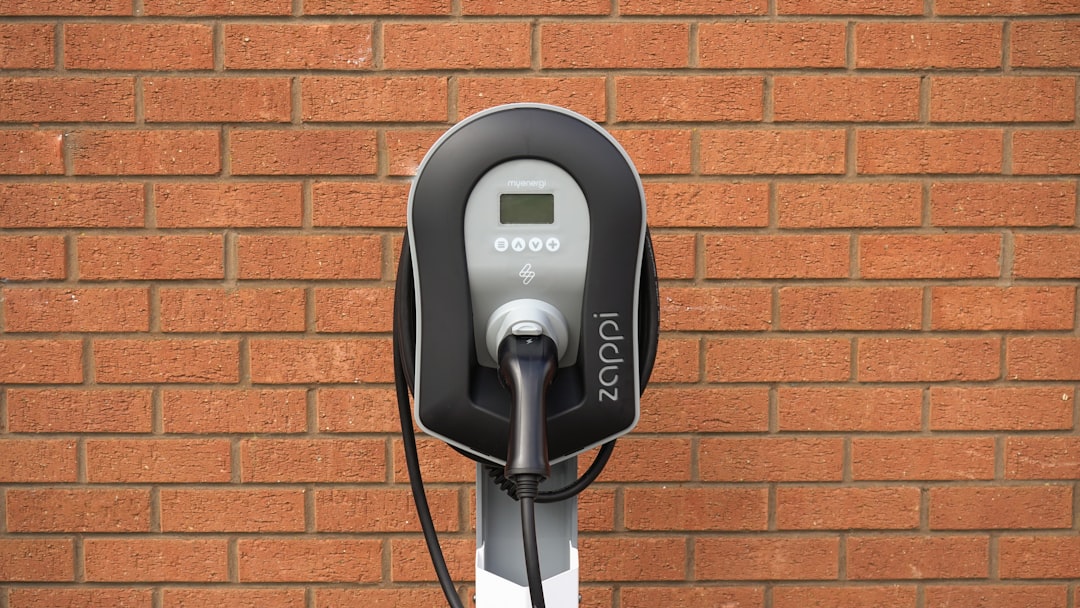
- Home charger installation: A Level 2 home charger typically costs $800–$1,500 installed in 2026 — a one-time cost, but one that matters in Year 1 calculations.
- Insurance premiums: EVs still carry slightly higher comprehensive insurance rates (3–8% more) due to repair complexity for body panels and sensors, though this gap has narrowed in 2026 as more repair shops become EV-certified.
- Tire wear: EV tires wear faster due to vehicle weight and instant torque delivery. Expect to replace tires every 25,000–35,000 miles vs. 40,000–50,000 for many ICE vehicles — a real and ongoing cost difference.
- Depreciation: EV residual values have stabilized considerably in 2026 after the turbulence of 2023–2024, but used EV pricing still depends heavily on battery health certification — something to request when buying pre-owned.
Who Should Still Seriously Consider an ICE Vehicle?
Here’s where I want to be genuinely realistic rather than just cheerleading for EVs. If you fall into any of these categories, the math might still favor a well-chosen gasoline or hybrid vehicle in 2026:
- You live in a rural area with limited charging access and frequently take long road trips without predictable charging stops.
- You rent your home and cannot install a Level 2 charger — relying solely on public DC fast charging negates much of the cost advantage and accelerates battery degradation over time.
- Your annual mileage is below 8,000 miles — the savings accumulate slowly enough that the upfront premium of an EV may never fully pay back.
- You’re buying used and cannot verify battery health with a certified diagnostic — the risk equation shifts considerably.
In these cases, a plug-in hybrid (PHEV) is genuinely worth exploring as a middle path. PHEHs like the Toyota RAV4 Prime or Hyundai Tucson PHEV let you run electrically for 25–50 miles daily (covering most commutes) while retaining the range confidence of a gas engine. Maintenance costs sit between full ICE and full EV — a thoughtful compromise for 2026 realities.
The 5-Year Total Cost of Ownership — A Simple Framework
Rather than getting lost in monthly figures, try thinking in 5-year blocks. For a mid-size vehicle driven 15,000 miles/year in the U.S. in 2026:
- ICE sedan (e.g., Honda Accord): ~$38,000 purchase + ~$9,000 fuel + ~$7,500 maintenance = ~$54,500 over 5 years
- EV sedan (e.g., Tesla Model 3, Hyundai IONIQ 6): ~$42,000 purchase + ~$4,500 energy + ~$3,500 maintenance + $1,200 home charger = ~$51,200 over 5 years
- PHEV (e.g., Toyota RAV4 Prime): ~$44,000 purchase + ~$5,500 fuel/energy + ~$5,000 maintenance = ~$54,500 over 5 years
The gap is real, but it’s not astronomical — and it narrows or widens significantly based on your specific driving habits, electricity rates, and local incentives. That’s exactly why personalized calculation beats generalized advice every time.
Editor’s Comment : The EV vs. ICE debate in 2026 is no longer about which technology is “better” in the abstract — it’s about which one fits your life’s geometry. The maintenance savings for EVs are genuinely compelling and well-documented at this point, but they’re most powerful when your living situation, driving patterns, and local infrastructure are aligned. Before making any decision, I’d encourage you to run your own 5-year calculation using your actual mileage, your local electricity rate, and honest answers about your charging access. The numbers will tell you a clearer story than any trend or social pressure ever could. Drive smart — whatever that means for you.
태그: [‘electric vehicle maintenance cost 2026’, ‘EV vs ICE total cost of ownership’, ‘electric car vs gas car expenses’, ‘plug-in hybrid alternative 2026’, ‘car maintenance savings EV’, ‘best car for cost efficiency 2026’, ‘electric vehicle real world costs’]
Leave a Reply