A friend of mine once ignored the low coolant warning light on his dashboard for about three weeks — figuring it was probably just a sensor glitch. Spoiler: it wasn’t. His engine overheated on the highway, and what could have been a $30 coolant flush turned into a $2,400 head gasket repair. Not exactly the kind of lesson you want to learn the hard way, right?
Coolant (also called antifreeze) is one of those maintenance items that quietly does a huge job — regulating your engine’s temperature year-round — but gets overlooked far too often. So let’s think through this together: when does it actually need changing, and can you do it yourself without a mechanic?
What Does Coolant Actually Do?
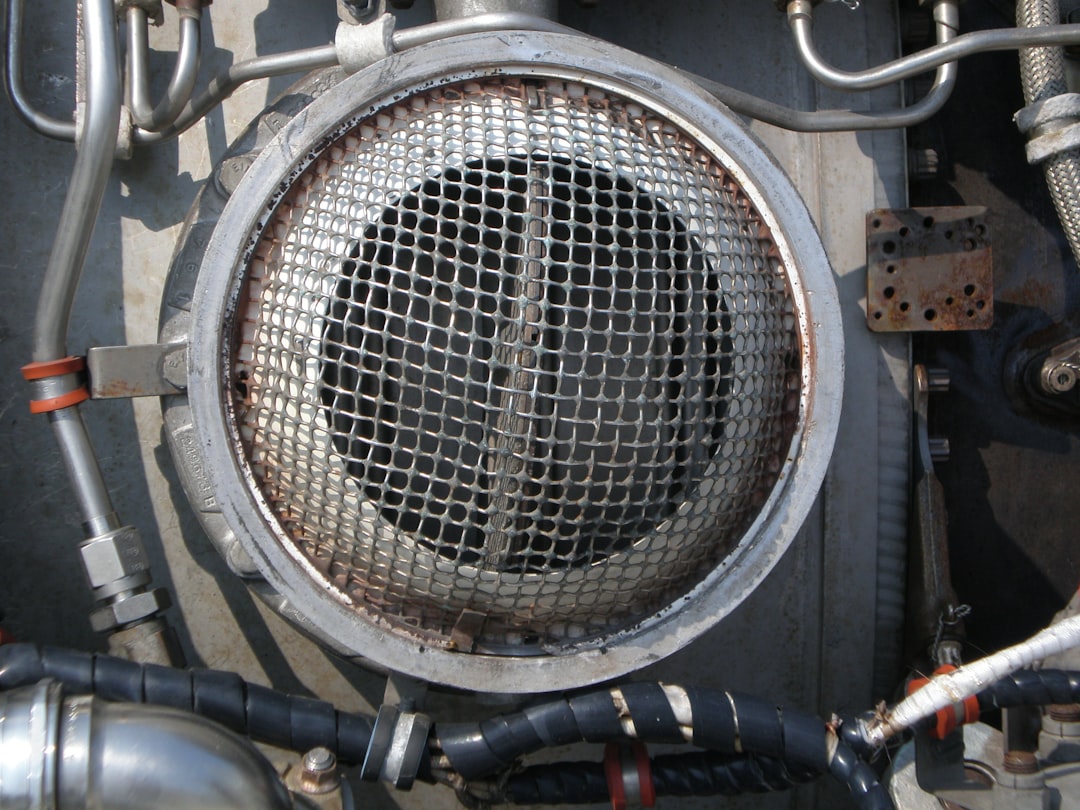
Before we talk about changing it, let’s make sure we’re on the same page about why it matters. Engine coolant (a mixture of water and antifreeze fluid, typically ethylene glycol-based) circulates through your engine block and radiator to absorb and dissipate heat. It also lowers the freezing point of the liquid in your cooling system (hence “antifreeze”) and raises its boiling point — a double win for extreme temperatures.
Here’s the key thing most people miss: coolant degrades over time. The corrosion inhibitors inside the fluid break down, the pH drops, and the fluid becomes slightly acidic. That acidic coolant starts attacking your radiator, water pump, hoses, and metal components from the inside. You don’t see it happening — but it’s happening.
When Should You Change Your Coolant? (The Data-Backed Answer)
This is where things get interesting, because the answer actually varies depending on your coolant type and vehicle age:
- Green coolant (IAT — Inorganic Additive Technology): The older formula, common in cars made before 2000. Needs replacement every 2 years or 30,000 miles, whichever comes first. Its corrosion inhibitors deplete quickly.
- Orange/red/pink coolant (OAT — Organic Acid Technology): Found in most modern vehicles post-2000. Designed to last 5 years or 50,000 miles. Used widely by GM, Toyota, Honda, and European brands (though formulations differ — always check your owner’s manual).
- Yellow/blue coolant (HOAT — Hybrid OAT): A blend of the two technologies. Typically rated for 5 years or 150,000 miles. Common in many 2020s-era vehicles including Ford, Chrysler, and BMW models.
As of 2026, many newer vehicles — particularly EVs and hybrids — use specialized coolant for battery thermal management systems, and those have their own unique service intervals. If you drive a hybrid or EV, always verify with your specific model’s manual before touching the cooling system.
A quick real-world tip: don’t just count the years — test the coolant with a simple strip test. You can buy coolant test strips online or at any auto parts store for under $10. They measure pH and freeze protection and give you a reliable “change now or wait” answer in about 30 seconds.
Signs Your Coolant Needs Changing Now
- The coolant looks rusty, brown, or murky (healthy coolant is bright and translucent)
- You notice a sweet smell from the engine bay — a classic sign of leaking or burning coolant
- Your temperature gauge is running higher than usual
- You can see sediment or floating particles in the coolant reservoir
- The coolant test strip shows pH below 7 or freeze protection above -20°F (-29°C)
Real-World Examples: How This Plays Out Globally
In South Korea, where seasonal temperature swings are dramatic — hot, humid summers and freezing winters — the Korea Transportation Safety Authority (TS) recommends coolant inspection every fall as a standard pre-winter vehicle check. Korean auto workshops report that a significant portion of winter breakdowns trace back to degraded coolant that no longer provides adequate freeze protection.
In Germany, where the TÜV vehicle inspection standard is among the world’s strictest, coolant condition is assessed during the biennial Hauptuntersuchung (HU) inspection. German workshops commonly use refractometers — a hand-held optical tool — to instantly measure coolant freeze point concentration. It’s a $15–$30 tool you can use at home, and it’s far more precise than float-type testers.
In the U.S. market, AAA’s 2025 vehicle maintenance research noted that cooling system failures remain one of the top five causes of roadside breakdowns — and a large portion of those are preventable with routine coolant flushes. For 2026 vehicles, many automakers are now printing coolant type stickers directly on the radiator cap to reduce user error during DIY maintenance — a small but smart design change.
How to Change Coolant Yourself: Step-by-Step
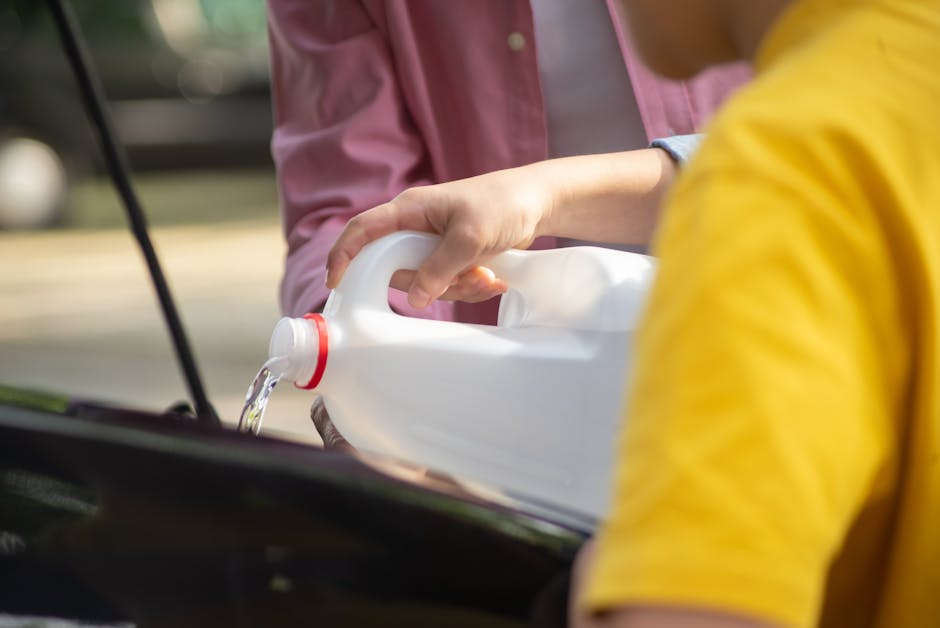
Here’s the honest reality: a basic coolant drain-and-refill is very manageable as a DIY task. A full flush (which purges the entire system with distilled water before refilling) is slightly more involved but still doable. Let’s walk through a standard drain-and-refill:
- Step 1 — Let the engine cool completely. Working on a hot cooling system is dangerous. Wait at least 2–3 hours after driving.
- Step 2 — Locate the drain petcock. This is usually a small plastic valve at the bottom of the radiator. Some vehicles use a lower radiator hose instead — you’d remove the hose clamp and pull the hose to drain.
- Step 3 — Place a drain pan underneath. Coolant is toxic to animals — never let it pool on the ground. You’ll need to dispose of it at an auto parts store recycling station (most accept it for free).
- Step 4 — Open the radiator cap (only when cold!) and the petcock. Let it drain fully — usually 5–10 minutes.
- Step 5 — For a flush, refill with distilled water, run the engine for 10 minutes, drain again. This clears residual old coolant and debris.
- Step 6 — Mix your new coolant. Most coolants come pre-mixed (50/50 water-coolant), which is ideal for most climates. If buying concentrated, mix 50/50 with distilled water only — tap water contains minerals that accelerate corrosion.
- Step 7 — Refill slowly through the radiator cap opening. Fill until it reaches the MAX line on the reservoir too. Replace the cap securely.
- Step 8 — Run the engine with the heat on full blast for 5–10 minutes to bleed air pockets. Check for bubbles and top off as needed.
- Step 9 — Check for leaks around the drain petcock and hose connections.
What If You’re Not Comfortable Doing It Yourself?
That’s a completely valid position, and here are realistic alternatives based on your situation:
- Budget-conscious: Visit a quick-lube shop (like Jiffy Lube or Valvoline Instant Oil Change in the U.S., or equivalent services globally). A coolant top-off or drain-and-fill typically runs $80–$150 in 2026, much less than a full radiator flush.
- Modern vehicle or EV owner: Strongly consider going to the dealership for the first coolant change, especially if your car uses a specialized fluid. The wrong coolant type can void warranty and cause real damage.
- Older vehicle with unknown history: If you just bought a used car and don’t know when coolant was last changed, a full professional flush is worth it for peace of mind — you’ll also get a proper inspection of hoses and the water pump.
Editor’s Comment : Coolant maintenance is genuinely one of those tasks that rewards the people who pay attention to it — not with anything glamorous, just with a car that keeps running reliably for years longer than it otherwise would. The DIY approach is very accessible here; you don’t need advanced skills, just patience and the right fluid for your specific vehicle. In 2026, with so many vehicles carrying hybrid battery systems or specialized cooling circuits, the single most important thing I’d tell any car owner is this: read your owner’s manual before touching anything. Your car’s cooling system is surprisingly specific — and getting the right coolant type right is far easier than fixing the damage from the wrong one.
태그: [‘coolant flush DIY 2026’, ‘antifreeze change interval’, ‘car cooling system maintenance’, ‘when to replace engine coolant’, ‘DIY car maintenance guide’, ‘radiator flush how to’, ‘coolant type OAT HOAT IAT’]
Leave a Reply