Picture this: it’s a freezing January morning, you turn the key, and your temperature gauge starts climbing way faster than it should. Or maybe it’s the opposite — a scorching summer highway, and your engine is quietly cooking itself because the coolant in your reservoir has degraded into a murky, rust-colored soup. Both scenarios are surprisingly common, and more often than not, they trace back to one overlooked decision: which coolant you used, and whether it was the right type for your vehicle.
Let’s think through this together, because the coolant aisle at an auto parts store can feel genuinely overwhelming. Green, orange, pink, blue, yellow — it looks like a candy shop, but each color (and chemistry) tells a very different story about what’s happening inside your engine.
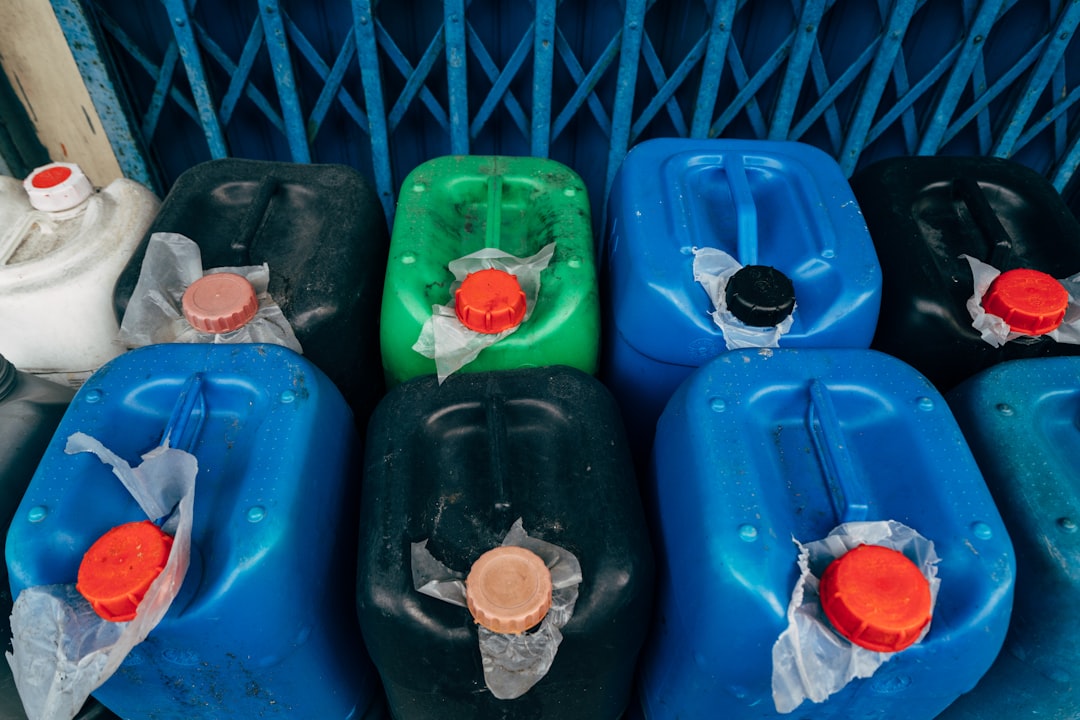
What Is Coolant, and Why Does the Type Actually Matter?
Coolant (also called antifreeze when concentrated) is a fluid that circulates through your engine’s cooling system to regulate temperature — keeping it from freezing in winter and overheating in summer. Most modern coolants are a mix of water and ethylene glycol (or sometimes propylene glycol), but the corrosion inhibitor package inside is where the real differences lie. That inhibitor package protects your aluminum heads, steel block, rubber hoses, and water pump from corrosion — and different engines need different chemistry.
Getting this wrong doesn’t just mean a voided warranty. It can mean silicate gel clogging a radiator, or OAT inhibitors slowly destroying older copper-brass cooling systems. So yes, the type genuinely matters.
The Three Main Coolant Technologies: IAT, OAT, and HOAT
IAT (Inorganic Additive Technology) is the traditional green coolant you’ve seen forever. It uses silicates and phosphates as corrosion inhibitors, which form a protective coating quickly — but that coating depletes fast. IAT coolants typically need to be replaced every 2 years or 24,000 miles. They’re best for older vehicles (pre-1990s) with copper-brass cooling systems.
OAT (Organic Acid Technology) is what most modern vehicles — especially GM, VW, and many Asian brands — specify. It uses organic acids (like sebacate or 2-EHA) that don’t deplete as fast, offering change intervals of 5 years or 150,000 miles. The catch? OAT coolants are incompatible with IAT systems and can cause issues in older engines. Common colors: orange (Dex-Cool), pink, or purple depending on the brand.
HOAT (Hybrid OAT) is the middle ground — a blend of organic acids AND silicates or phosphates. This is what many European manufacturers (BMW, Mercedes, Volkswagen’s G12++ and G13 specs) and most Chrysler/Ford vehicles spec. HOAT covers a wider range of metals and offers around 5-year or 100,000-mile service life. Colors vary widely: blue, yellow, turquoise.
Si-OAT and P-OAT: The Sub-Categories You Should Know in 2026
As engine metallurgy has evolved — particularly with more aluminum components and electric water pumps — manufacturers have further refined HOAT into sub-specs:
- Si-OAT (Silicated OAT): Used by BMW (Blue), Mercedes (MB 325.6), and Audi/VW (G12evo, G13). Excellent aluminum protection, ~5-year life.
- P-OAT (Phosphated OAT): Dominant across Japanese and Korean brands — Toyota (FL-22, pink), Honda (Type 2, blue-green), Hyundai/Kia (Genuine Blue). Uses phosphates instead of silicates for aluminum compatibility.
- OAT (Carboxylate only): GM’s Dex-Cool (orange) falls here. Works well in GM engines but is notoriously problematic if water ratio gets off or if mixed with IAT coolant.
Real-World Brand Examples: What Do Automakers Actually Recommend?
Let’s ground this in actual vehicles people drive in 2026:
- Toyota / Lexus: Specify Toyota Super Long Life Coolant (pink, P-OAT, FL-22 spec). Rated for 11 years / 135,000 miles on first fill — one of the most impressive OEM intervals currently available.
- Hyundai / Kia: Use Genuine Blue coolant (P-OAT), commonly available from Mobis. 5-year / 100,000 km intervals. Widely sold in Korea and Asia-Pacific markets under the Ssangyong and KGM umbrella as well.
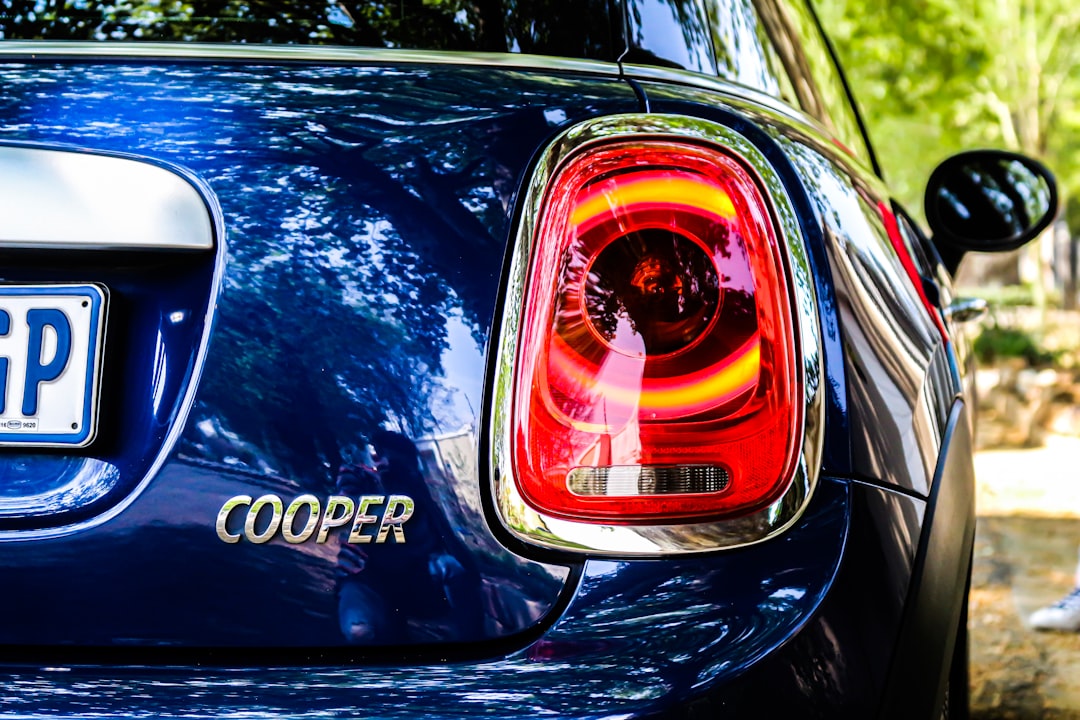
- BMW / MINI: Specify their own blue-colored Si-OAT (BMW 82141467704 or equivalent meeting LL-98 spec). Do NOT use phosphate-based coolants in these — it can precipitate solids in the cooling system.
- Ford (North America): Motorcraft Gold (HOAT, yellow) for most post-2002 vehicles. Ford switched from green IAT in the early 2000s and now specs gold across the F-150, Mustang, and Explorer lineups.
- GM (North America): Dex-Cool (OAT, orange). Has a checkered history — early 2000s intake manifold gasket issues were sometimes blamed on it — but modern Dex-Cool formulations from ACDelco are significantly improved.
- Mercedes-Benz: Requires MB 325.6 spec (Si-OAT), supplied by companies like Zerex G-48 or Febi Bilstein. Using a non-spec coolant here is a warranty red flag.
The Mixing Trap: Why “Top It Off” Can Be a Costly Mistake
Here’s something most people don’t realize: coolant color is not standardized across brands. A pink coolant from one brand might be P-OAT; from another, it could be a dyed IAT. When you mix incompatible coolants, the organic acids and silicates can react, forming a gel-like precipitate that clogs your radiator and heater core. This is an expensive repair — radiator replacement alone can run $400–$900 in 2026 labor markets.
The safest rule: always identify your vehicle’s OEM coolant spec first, then top off or refill with a product that explicitly meets that spec — not just matches the color.
Propylene Glycol vs. Ethylene Glycol: Is the “Safer” Option Worth It?
Most coolants use ethylene glycol — effective but toxic to pets (it tastes sweet, which is the danger). Propylene glycol-based coolants (like Sierra by Star brite) are marketed as non-toxic and safer for households with animals. The tradeoff? Propylene glycol has slightly lower heat transfer efficiency and a higher freeze point at the same concentration, so you’d need a higher mix ratio for equivalent cold protection. For most people in typical climates, the difference is negligible. For someone with outdoor pets and a leaky cooling system? It might be worth the slight performance tradeoff.
Practical Buying Guide: How to Choose Without Overthinking It
- Step 1: Look up your owner’s manual or OEM spec sheet. Search “[Your car model] coolant specification” — manufacturer sites and forums are reliable for this.
- Step 2: Match the spec, not the color. Look for products that explicitly state “meets [your spec]” on the label (e.g., “meets Dex-Cool,” “meets BMW LL-98,” “meets Toyota FL-22”).
- Step 3: Decide between pre-diluted (50/50 ready-to-use) and concentrated. Pre-diluted is convenient but costs more per effective volume. Concentrated mixed 50/50 with distilled water (not tap water — minerals cause scale) is the economical choice.
- Step 4: Check your current coolant’s condition with an inexpensive test strip ($5–$10 at any auto parts store). If pH is below 7 or the freeze point has shifted, it’s time for a flush regardless of mileage.
- Step 5: Budget-conscious? Zerex and Prestone both offer HOAT formulations (Zerex G-48, Prestone All Vehicles) that are genuinely compatible across a wide range of modern vehicles. Not always the OEM choice, but a safe fallback when you’re in a pinch.
Realistic Alternatives for Different Situations
If you drive a high-mileage older vehicle (pre-1995, copper-brass radiator): Stick with a green IAT coolant and change it every 2 years. The fast-acting silicate protection is exactly what those older metals need.
If you drive a modern Japanese or Korean car under warranty: Don’t improvise. Use the OEM coolant or a product explicitly meeting that brand’s spec. The cost of the correct coolant is trivial compared to a warranty dispute over a corroded water pump.
If you’re working on a European luxury vehicle (BMW, Mercedes, Porsche): Si-OAT is non-negotiable. The engineering tolerances on these cooling systems are tight, and contamination shows up faster than on more forgiving domestic engines.
If you just need a quick top-off on a road trip and can’t identify what’s in the reservoir: Add distilled water only — it won’t react with anything, and it buys you time to properly flush and refill later.
Editor’s Comment : Coolant is one of those maintenance items that’s easy to ignore until it becomes a very expensive problem. The good news? Once you know your vehicle’s spec and have the right product on hand, it’s genuinely one of the simpler DIY maintenance tasks — a flush and fill takes about 45 minutes and costs a fraction of a shop visit. Think of it this way: the $20–$40 you spend on the right coolant every few years is essentially an insurance policy for a part of your engine that can cost thousands to repair if neglected. Know your spec, don’t mix blindly, and check that reservoir level every few months. Your future self (and your radiator) will thank you.
태그: [‘coolant types comparison’, ‘antifreeze buying guide 2026’, ‘IAT OAT HOAT coolant’, ‘best engine coolant’, ‘car maintenance tips’, ‘coolant compatibility guide’, ‘antifreeze recommendations’]
Leave a Reply