A friend of mine — let’s call her Dana — bought her first electric vehicle back in late 2024, fully convinced she’d never have to worry about car maintenance again. Fast forward to 2026, and she’s standing at a tire shop, jaw slightly dropped, realizing her EV’s tires wear out faster than her old Honda Civic’s did. “I thought EVs were basically free to run,” she told me, half-laughing, half-wincing. Sound familiar? That assumption is more common than you’d think — and it’s worth unpacking properly before you make a big financial decision.
Today, let’s walk through the real, itemized cost of owning an electric vehicle versus an internal combustion engine (ICE) car in 2026, with actual data, global examples, and — most importantly — a realistic look at who benefits most from each option.
🔧 The Consumables You Actually Need to Replace: Side-by-Side
When we talk about “consumables” or wear items, we mean the parts that degrade with regular use and need periodic replacement — regardless of what powers your car. Let’s break these down honestly.
- Engine Oil & Filters: ICE vehicles typically require an oil change every 5,000–10,000 km, costing anywhere from $40–$120 per service depending on the vehicle. EVs? Zero. No engine oil, no oil filter. This is the most well-known saving.
- Coolant System: ICE cars need coolant flushes every 2–5 years (~$80–$150). EVs do have thermal management systems for the battery, but the maintenance interval is significantly longer and less frequent — roughly every 5–7 years in most 2026 models.
- Transmission Fluid: Automatic ICE vehicles require transmission fluid changes every 60,000–100,000 km (~$150–$300). Most EVs use a single-speed reduction gear with sealed, long-life fluid — often labeled “lifetime fill,” though real-world data suggests inspection after 150,000 km is wise.
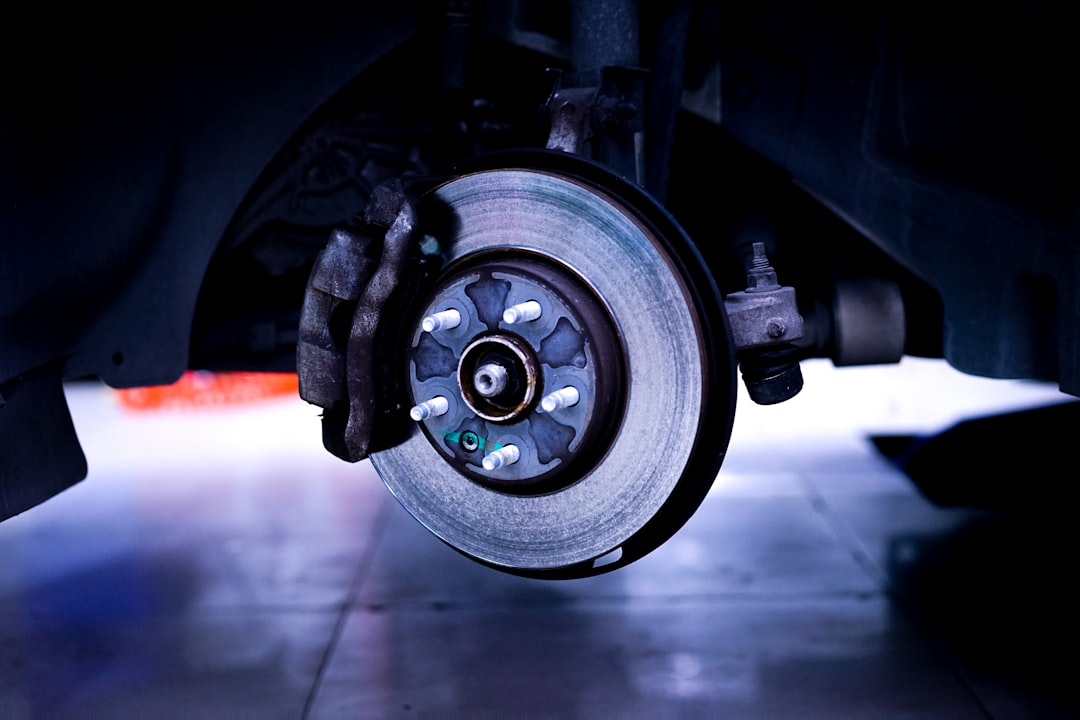
- Brake Pads & Rotors: Here’s a nuance many people overlook. EVs use regenerative braking extensively, which dramatically reduces wear on physical brake pads. EV brake pads can last 100,000–150,000 km versus 40,000–70,000 km for ICE vehicles. However, because the rotors spin less, they can actually corrode faster in humid climates — especially in coastal cities or regions with heavy rain.
- Tires: This is Dana’s surprise. EVs are heavier (battery weight) and deliver instant torque, both of which accelerate tire wear. Studies from TÜV Rheinland and Michelin’s 2025–2026 fleet data suggest EVs wear tires approximately 20–30% faster than equivalent ICE cars. Expect tire replacement every 25,000–35,000 km on an average EV versus 40,000–50,000 km on a comparable gas car. At $150–$250 per tire, this adds up meaningfully.
- Air Filters (Cabin & Engine): ICE cars need both a cabin air filter and an engine air filter replaced regularly. EVs only require a cabin air filter. Small saving, but worth noting.
- Spark Plugs & Ignition Components: Entirely absent in EVs. ICE vehicles spend $80–$200 on spark plug replacements every 30,000–100,000 km depending on the type (copper vs. iridium).
- 12V Auxiliary Battery: Often forgotten, but both EVs and ICE cars carry a small 12V battery for accessories and control systems. EVs actually replace these more frequently in some models due to higher electrical demand from systems staying active. Average replacement cost: $150–$250 every 4–6 years.
- High-Voltage Battery (EV-specific): The big wildcard. Most 2026 EVs come with 8-year/160,000 km battery warranties. Replacement outside warranty can range from $8,000–$20,000 depending on the vehicle — though battery costs have dropped significantly, and many automakers now offer battery health subscription models.
📊 Annual Cost Estimate: Running the Numbers in 2026
Let’s look at a realistic annual comparison for a mid-size family sedan driven approximately 15,000 km per year, based on 2026 average market data across the US, South Korea, and Western Europe:
- ICE Sedan (e.g., Toyota Camry, Hyundai Sonata): Oil changes x3/year ($270), air filters ($60), occasional brake service ($150 amortized), tire rotation & wear ($200 amortized), spark plugs ($50 amortized) = roughly $730–$900/year in consumable maintenance, excluding fuel.
- EV Sedan (e.g., Tesla Model 3, Hyundai IONIQ 6, BYD Seal): No oil changes ($0), cabin filter ($40), brake service ($30 amortized due to regen braking), tire replacement ($400–$600 amortized due to faster wear), 12V battery ($50 amortized) = roughly $520–$720/year in consumable maintenance, excluding energy costs.
So the EV advantage on consumables alone? Around $150–$250 per year — real, but more modest than most marketing suggests. The larger savings still come from energy costs, where electricity remains significantly cheaper than gasoline in most regions as of 2026.
🌍 Real-World Examples: Korea, Germany, and California in 2026
Looking at global markets gives us a richer picture than any single data point.
South Korea: The Korean government’s 2026 EV subsidy program has made EVs more accessible, but maintenance infrastructure is still catching up. Independent EV mechanics are scarcer than ICE specialists, meaning many Korean EV owners still rely on dealership service centers — which charge premium rates. A Hyundai IONIQ 6 owner in Seoul reported spending about ₩680,000 (~$490 USD) annually on maintenance, versus ₩1,100,000 (~$795 USD) for a comparable Sonata ICE — a meaningful saving, though smaller than advertised.
Germany: In Germany, where highway speeds are high, tire wear on EVs is even more pronounced. Fleet data from German logistics companies using EV vans in 2025–2026 shows tire replacement intervals 35% shorter than ICE equivalents. German mechanics have also flagged that EV brake rotors in northern climates (salt roads, less braking friction to clean the rotor surface) require earlier replacement than expected — a maintenance cost that’s rarely discussed in EV promotional materials.
California, USA: California EV owners benefit from a dense charging network and strong resale values, but the state’s extreme temperature swings (desert heat in summer, mountain cold in winter) stress battery thermal management systems. Battery conditioning software updates in 2025–2026 models have helped, but older 2021–2022 EVs in California are beginning to see battery degradation that affects range — raising questions about the long-term cost calculus for used EV buyers.
💡 Who Actually Saves the Most — and Who Might Not
Here’s where the “let’s think this through together” part really matters. EVs don’t make equal financial sense for everyone, and a 2026 perspective needs to reflect the nuanced reality:
- High-mileage urban commuters: Big winners. Frequent short trips benefit maximally from regenerative braking savings and low per-km energy costs. Oil change savings compound quickly.
- Rural drivers with long highway commutes: More neutral. Fewer oil changes saved, but faster tire wear and charging infrastructure gaps can negate savings.
- Families who keep cars 10+ years: Watch the battery. Long-term ownership increases the statistical probability of battery replacement outside warranty, which could flip the total cost equation.
- Lease drivers (2–4 year cycles): Near-ideal EV candidates. You capture consumable savings and avoid long-term battery risk entirely.
- People in hot or extremely cold climates: Factor in battery conditioning energy costs and potentially accelerated thermal system wear.
🔄 Realistic Alternatives Worth Considering in 2026
If you’re not sure EVs work for your situation yet, it’s not a binary choice in 2026. Plug-in hybrid electric vehicles (PHEVs) have matured significantly — models like the Toyota RAV4 Prime (2026 refresh) and Hyundai Tucson PHEV offer meaningful electric-only range for daily commutes (50–80 km on electricity) while maintaining a conventional drivetrain for longer trips. You get most of the consumable savings — no oil changes on short electric trips, reduced brake wear — without battery range anxiety. For many drivers, especially those with unpredictable travel patterns, a PHEV in 2026 arguably delivers the best of both worlds from a pure maintenance-cost perspective.
For those already committed to full EV, the smartest move right now is tire strategy: invest in EV-specific tires (Michelin’s e-Primacy or Bridgestone’s Turanza EV line), maintain proper inflation religiously (underinflation accelerates wear dramatically with EV torque), and rotate tires every 8,000–10,000 km rather than the standard 12,000 km interval.
Editor’s Comment: The EV vs. ICE cost debate in 2026 is finally maturing past the hype phase — and that’s genuinely exciting. The truth is nuanced: EVs do save meaningfully on most consumables, but the tire wear story is real, the battery wildcard still matters for long-term owners, and your driving profile determines your actual savings more than any spec sheet will. The best financial decision isn’t automatically the newest technology — it’s the one that fits your specific life. Do the math with your own numbers, not the averages, and you’ll land in the right place.
📚 관련된 다른 글도 읽어 보세요
- 2026년 자동차 와이퍼 블레이드 추천 비교 순위 – 종류별·차종별 완벽 정리
- 2026 SUV 신차 실내공간 & 편의사양 완전 정복 — 무엇이 달라졌나?
- Best Wiper Blades of 2026: Ranked, Compared & Honestly Reviewed So You Stop Wasting Money
태그: [‘EV maintenance cost 2026’, ‘electric vehicle vs gasoline car’, ‘EV consumables comparison’, ‘electric car tire wear’, ‘PHEV vs EV cost’, ‘car ownership costs 2026’, ‘EV brake maintenance’]
Leave a Reply