A friend of mine — sharp guy, worked in finance for years — blew up his third forex account last spring. Not because he was reckless. Not because he didn’t study. He had RSI setups, moving average crossovers, a whole journal. But every strategy he tried seemed to work for two weeks and then fall apart completely. Sound familiar?
That story kicked off a months-long rabbit hole for me. What’s actually going wrong? Is it the strategies themselves, the execution, or something more structural about how retail traders approach the forex market in the first place? Let’s dig in together — because the answer is more nuanced than ‘just use better risk management.’
The Core Problem: Strategies Aren’t the Issue — Market Regime Mismatch Is
Here’s a number that should stop you in your tracks: according to data from ESMA (European Securities and Markets Authority) and various broker disclosures, between 70–80% of retail CFD/forex traders lose money consistently. Some brokers report figures as high as 82%. But more interesting than the number is why.
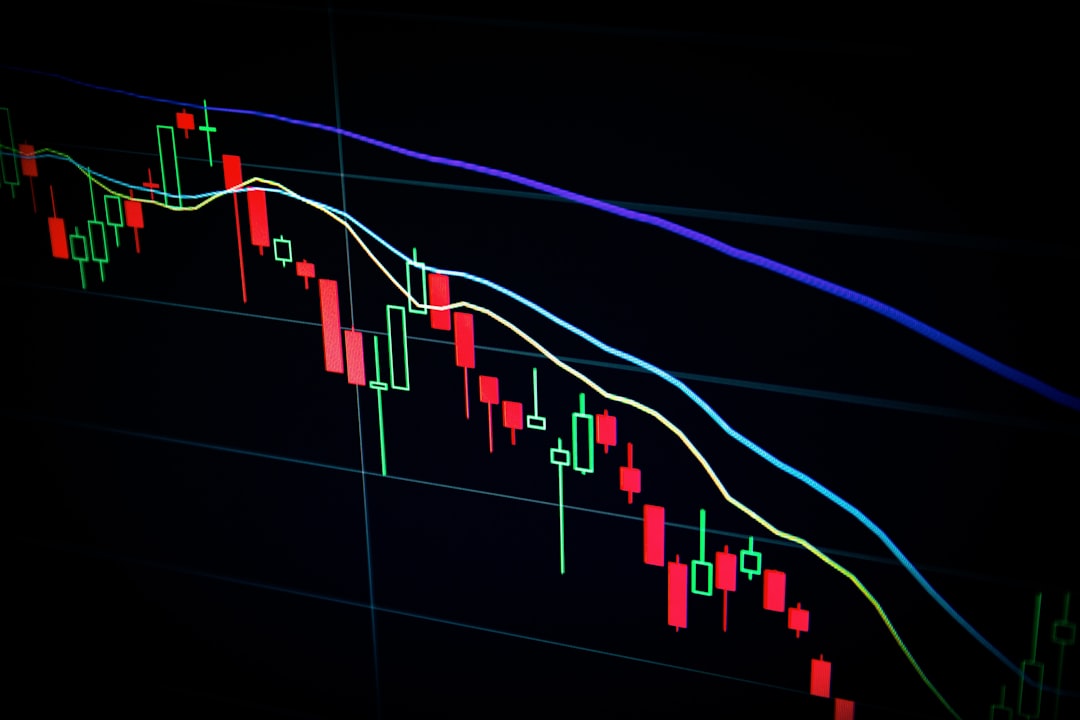
Most retail traders treat forex strategies like static tools — ‘the 50/200 EMA crossover works, full stop.’ But the forex market cycles through distinct regimes: trending, ranging, and volatile/news-driven. A strategy optimized for trending EUR/USD in Q1 2025 will hemorrhage pips in a choppy, low-volatility range two months later. This is called strategy-regime mismatch, and it’s the silent killer of most retail accounts.
- Trending regime: Momentum strategies (EMA crossovers, breakouts) work well. Typical ADX readings above 25.
- Ranging regime: Mean-reversion setups (RSI extremes, Bollinger Band bounces) outperform. ADX below 20, price oscillating between support/resistance.
- Volatile/event-driven: Almost all mechanical strategies fail. NFP, FOMC, CPI releases create ‘stop hunt’ wicks that trigger your stops before the real move.
My friend’s journal? Every entry was using trend-following tools during a period when EUR/USD was essentially flat-ranging between 1.0780 and 1.0920 for six consecutive weeks. Classic mismatch.
The Leverage Trap: How ‘Small’ Positions Become Account-Ending Mistakes
Forex brokers in 2025 still offer retail leverage up to 30:1 in the EU (post-ESMA regulations) and up to 500:1 on some offshore platforms. The math is seductive: control $100,000 in EUR/USD with just $200 margin. But here’s the brutal arithmetic that most trading courses gloss over.
At 100:1 leverage, a 1% adverse move wipes your entire margin. EUR/USD moves 100 pips? That’s roughly 0.9–1% on a standard lot. On a volatile day — say, a surprise Fed statement — EUR/USD can move 150–200 pips in under an hour. At high leverage, you’re not trading a strategy anymore; you’re buying a lottery ticket with delayed results.
The specific failure pattern I see repeatedly:
- Trader opens position with 50:1 leverage, confident in setup.
- Price moves 40 pips against them (normal intraday noise).
- Margin call or panic close occurs before the trade could have worked.
- Then price reverses exactly where the analysis predicted — but they’re already out.
The fix isn’t eliminating leverage — it’s using it proportionally. Most professional forex traders I’ve researched cap effective leverage at 5:1 to 10:1, regardless of what their broker offers. That means risking 1–2% of account equity per trade maximum, which is the golden rule that survives every market regime.
What Actually Works in 2025: Data-Backed Approaches
Let me share what the research and live trading data suggest about strategies holding up in current market conditions.
1. Session-Based Trading with Confluent Levels
The London-New York overlap (roughly 12:00–16:00 UTC) still generates the highest pip movement and tightest spreads. Strategies that wait for price to establish a clear directional bias in the first 30 minutes of this overlap — then enter on a pullback to a key level — have shown more consistency than pure indicator-based signals. Sites like Babypips and ForexFactory still host live community tracking of these setups with decent sample sizes.
2. Economic Calendar Integration (Non-Negotiable in 2025)
With central bank policy divergence at decade highs — the Fed holding rates while the ECB and BOJ navigate their own cycles — news sensitivity in majors like USD/JPY and EUR/USD is elevated. Tools like Investing.com’s economic calendar or DailyFX allow traders to filter out high-impact news windows. Trading through NFP or FOMC without a specific news-trading strategy is the equivalent of driving blindfolded.
3. Algorithmic / Semi-Automated Rule Sets
Platforms like MetaTrader 5 and cTrader allow traders to code rule-based entry/exit criteria. The advantage isn’t that the algorithm is smarter — it’s that it removes emotional override. The most common retail error? Manually closing a trade early because ‘it felt wrong,’ then watching it hit the original target. Backtesting on MT5 with at least 5 years of tick data (not just OHLC) gives a statistically meaningful sample size.
The Psychological Layer Nobody Talks About Honestly
Strategy and risk management are teachable. The psychological layer is where it gets personal. In 2025, with social media full of ‘forex lifestyle’ accounts showing Lamborghinis and 10x returns, the psychological pressure on retail traders is arguably worse than ever.
Research from behavioral finance — notably work cited in Dr. Brett Steenbarger’s trading psychology studies — consistently shows that performance anxiety leads to revenge trading, which is entering a new position immediately after a loss to ‘win it back.’ This is where most blown accounts actually die: not on the first loss, but on the emotional spiral after it.
Practical countermeasures that have actual evidence behind them:
- Daily loss limit: Define a maximum daily drawdown (e.g., 3% of account) and stop trading for the day when hit. Non-negotiable.
- Trade review ritual: Review every closed trade within 24 hours — not to judge, but to categorize (good process/bad outcome vs. bad process regardless of outcome).
- Reduce position size after drawdown: If you’re down 10% on the month, halve your normal position size until you recover 5%. This is standard practice at prop firms.
Realistic Alternatives If Pure Discretionary Trading Isn’t Working
If you’ve tried multiple strategies and keep hitting the same wall, it’s worth considering whether discretionary retail forex trading is the right vehicle for your goals — not because forex is ‘rigged’ (it isn’t), but because it may not match your available time, temperament, or capital base.
Some evidence-backed alternatives worth exploring:
- Copy trading platforms (eToro, NAGA): Let you follow verified professional traders with audited track records. Still carries risk, but removes the strategy-selection burden.
- Forex ETFs or currency-hedged equity funds: If your underlying goal is currency exposure rather than active trading, instruments like Invesco DB US Dollar Index Bullish Fund (UUP) or currency-hedged ETFs provide exposure without leverage risk.
- Prop firm challenges: Firms like FTMO or MyForexFunds (verify current regulatory status in 2025) provide funded accounts if you pass evaluation. This forces disciplined risk parameters by design — the structure itself trains better habits.
Bottom line for you: The forex market isn’t broken, and neither are you if you’ve been struggling. The gap is almost always in regime awareness, leverage calibration, and emotional discipline — not strategy sophistication. Before adding another indicator to your chart, ask yourself: do I know what market regime I’m currently in? If the answer is ‘not really,’ start there. That single question, answered honestly before every trade, will do more for your account than any new setup you find online.
📚 관련된 다른 글도 읽어 보세요
- 아직도 그냥 사? 2026년 기준 전기차 보조금 싹 다 받는 법 — 모르면 수백만 원 손해
- Why I Almost Missed My Flight Trusting Google Maps — Real 2025 Guide to Navigating Incheon Airport Terminal 2
- Why I Almost Missed My Flight Trusting Google Maps — Real 2025 Incheon Airport Guide
태그: forex trading strategies, retail forex mistakes, forex risk management, currency trading 2025, forex psychology, leverage in forex, forex market regimes
Leave a Reply