A friend of mine — let’s call him Dave — moved to a rural property in central Montana about two years ago. He runs a small software consulting business entirely remotely, and before he made the leap, he spent weeks researching his internet options. He called me in a mild panic: “I’m looking at Starlink, HughesNet, and Viasat, and every review I find either reads like a press release or was written in 2021. Which one actually works?” That conversation is the whole reason I went down this rabbit hole, and honestly, what I found surprised even me.
Satellite internet has historically been the option of last resort — the thing you settled for when fiber never came and your 4G signal was two bars of despair. But the landscape has shifted dramatically, and not all three of these services have shifted equally. Let’s dig in together.
The Core Technology Gap You Need to Understand First
Before we compare pricing and speeds, the single most important thing to grasp is orbital altitude, because it determines nearly everything about your experience.
- Starlink (SpaceX): Low Earth Orbit (LEO), roughly 340–570 km altitude. This is the key differentiator.
- HughesNet (EchoStar): Geostationary orbit (GEO), approximately 35,786 km altitude.
- Viasat: Also GEO, same ~35,786 km altitude, though their newer ViaSat-3 constellation is partially LEO/MEO-hybrid in rollout phases.
Why does altitude matter so much? Physics. A signal traveling 570 km round-trip introduces roughly 20–40 ms of latency. A signal traveling 35,786 km introduces 600–700 ms. That’s not a spec sheet footnote — it’s the difference between usable video calls and a frustrating, choppy mess. For Dave’s software consulting work, that latency difference is essentially the difference between working and not working.
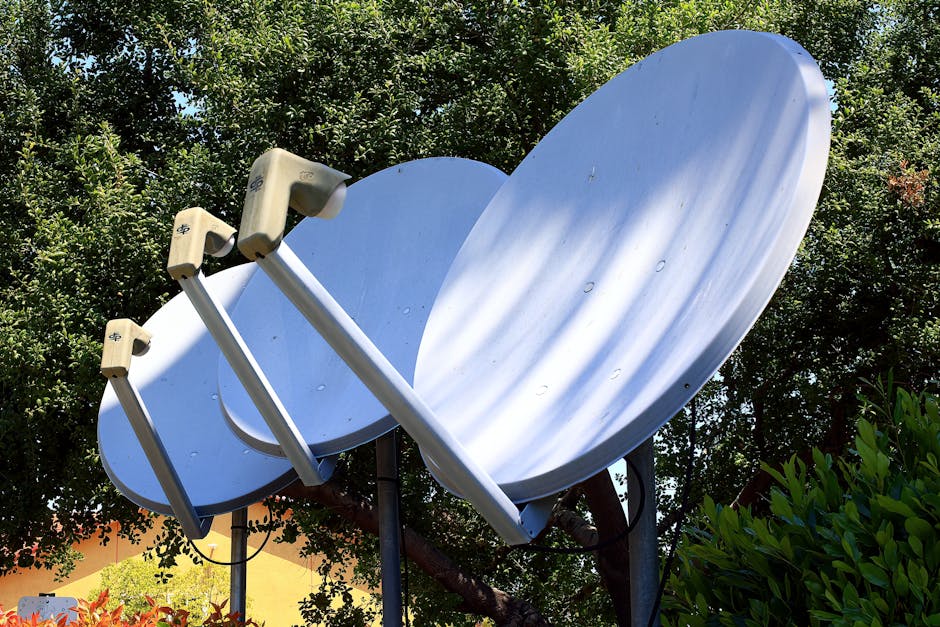
Real-World Speed Data in 2025: What the Numbers Actually Say
I pulled data from multiple sources including Ookla’s Speedtest Intelligence reports, the FCC’s Measuring Broadband America program, and community aggregators like Reddit’s r/Starlink and DSLReports to get a grounded picture.
Starlink (Standard/Residential):
- Median download speed: 90–220 Mbps (varies heavily by region and congestion)
- Median upload speed: 8–25 Mbps
- Latency: 20–60 ms typical, occasionally spiking to 100+ ms during peak hours
- Monthly cost (hardware + service): ~$120/month service + $599 one-time hardware (dish + router)
HughesNet (Gen 5 / Fusion plans):
- Median download speed: 25–50 Mbps on newer Fusion plans (their hybrid satellite+terrestrial offering)
- Median upload speed: 3–5 Mbps
- Latency: 594–624 ms on standard plans; Fusion plans drop this to 100–200 ms by using cellular for latency-sensitive traffic
- Monthly cost: $49.99–$149.99/month depending on data tier; equipment lease ~$14.99/month or purchase ~$449
Viasat (Residential plans):
- Median download speed: 25–100 Mbps (highly location-dependent based on beam capacity)
- Median upload speed: 3–10 Mbps
- Latency: 594–630 ms typical
- Monthly cost: $70–$200/month; equipment ~$299–$599 depending on plan
The honest caveat here: Starlink’s speeds have actually softened from their 2022 peak averages (which touched 100–200 Mbps median in less congested areas) as the subscriber base has grown. SpaceX’s ongoing satellite launches — they’ve deployed over 6,000 Starlink satellites as of early 2025 — are meant to address this, but network congestion during evening hours (7–10 PM local) is a real, documented issue in suburban fringe and rural areas alike.
The Hidden Data Cap Problem Nobody Talks About Loudly Enough
This is where HughesNet and Viasat have historically gotten users into trouble, and it’s worth being blunt about it.
HughesNet’s plans still include what they call a “Priority Data” allowance — once you exhaust it (ranging from 15 GB to 100 GB depending on your plan), your speeds are throttled to around 1–3 Mbps. That’s technically “unlimited” in the marketing sense, but 2 Mbps for the rest of the month is barely functional for streaming standard definition video, let alone work applications. Their Fusion plans improve the situation meaningfully but only work if you’re within range of a cellular signal — which Dave, in central Montana, was not.
Viasat moved to “unlimited” plans a couple of years ago but includes what they call “network management” policies — speeds are deprioritized based on network demand and your usage tier. In practice, heavy users in congested beam areas report speeds dropping below 10 Mbps consistently in evenings. Their ViaSat-3 Americas satellite launched in 2023 promised to change this, but actual real-world deployment gains have been more modest than the marketing suggested.
Starlink uses a “fair use” / priority data system on its residential plans, but the thresholds are much higher (1 TB/month on some plans before any deprioritization kicks in), and the deprioritization is generally less severe in practice.

Specific Use Cases: Who Should Actually Pick What
Rather than giving you a blanket recommendation, let’s think through this conditionally — because the “right” answer genuinely depends on your situation.
- If you work remotely with video calls, VPN, or real-time applications: Starlink is the only realistic option here. GEO latency (600+ ms) makes VoIP and video conferencing objectively painful — not just annoying, but functionally broken in many cases. Tools like Zoom, Microsoft Teams, and Cisco Webex have minimum latency thresholds for acceptable performance, and GEO satellites exceed them.
- If your primary use is streaming video and basic browsing, and Starlink isn’t available in your area: Viasat’s higher-tier plans can handle Netflix/YouTube adequately. Just budget for the $150–$200/month reality if you want the higher priority data allowance.
- If you’re extremely budget-constrained and have light usage needs: HughesNet’s entry-level plans at ~$50/month are the cheapest entry point. The Fusion plans (where available) are genuinely better than older GEO-only offerings. But go in clear-eyed about the limitations.
- If you’re in a truly remote location (Alaska, offshore, expedition work): Starlink Maritime or their “Portability” add-on plans are worth the premium — HughesNet and Viasat don’t offer meaningful mobile/portable options for most consumers.
Installation Realities and the Obstruction Problem
One thing that doesn’t get enough coverage in comparison articles: Starlink’s dish has a non-negotiable need for a clear view of the northern sky (in the northern hemisphere). The Starlink app has a sky obstruction checker, and I’d strongly recommend running it before ordering. Trees, roof overhangs, chimneys — anything blocking that arc will cause dropout events, sometimes every few minutes. Dave had to mount his dish on a 20-foot pole to clear a tree line, which added about $200 in mounting hardware and a half-day of frustrating work.
HughesNet and Viasat point to fixed geostationary satellites at specific azimuth/elevation angles depending on your location. A certified installer handles this during setup (typically included in their installation fee), and once it’s aligned, it stays aligned. There’s something to be said for that simplicity.
What Dave Actually Did — and What Happened
After going through all of this, Dave went with Starlink. His speeds average around 110 Mbps down and 12 Mbps up, with latency sitting around 35–45 ms on most days. His video calls work. His VPN tunnel to his main client’s network is stable. He had two multi-hour outages in the first six months — one during a significant ice storm that coated the dish (Starlink dishes do have a built-in melt function, but it takes time), and one that appeared to be a regional network issue that Starlink resolved within about four hours.
Is it perfect? No. He still describes it as “really good for satellite and kind of annoying compared to fiber.” But for his situation, it was the right call.
The Competitive Trajectory in 2025
It’s worth noting that this market is actively evolving. Amazon’s Project Kuiper has begun initial satellite deployments and is expected to offer consumer service in select markets later this year — which should introduce genuine LEO competition to Starlink’s pricing. Telesat Lightspeed is targeting enterprise/carrier customers rather than residential, but their infrastructure buildout adds indirect pressure. And T-Mobile’s partnership with Starlink for direct-to-cell coverage is already expanding, which may eventually change the calculus for hybrid cellular/satellite options in areas with weak but present cellular signals.
HughesNet and Viasat are not standing still either — Viasat’s acquisition of Inmarsat and their ViaSat-3 constellation represent real investment. But closing the latency gap against LEO systems is a physics problem, not just an engineering one. GEO satellites will always have that orbital distance working against them for latency-sensitive applications.
Bottom line from my research: If Starlink is available at your address and you can absorb the upfront hardware cost, it’s the clear choice for anyone with work-from-home or real-time internet needs in 2025. If the $599 hardware cost is the sticking point, check whether Starlink offers any refurbished hardware discounts (they do periodically), or consider whether a 12-month HughesNet contract while saving for the switch makes sense. And if you’re genuinely just a light user who streams some Netflix and checks email? HughesNet’s Fusion plans are a more honest product than they used to be — just verify cellular coverage in your area before signing up.
📚 관련된 다른 글도 읽어 보세요
- Why I Stopped Buying Cheap Blankets — The Real Blanket Guide for 2025
- Why I Almost Gave Up on My Business Plan — Real Talk on Business Plan Writing Services in 2025
- Why I Almost Gave Up on Bitcoin — And What the Data Told Me Instead in 2025
태그: Starlink review 2025, HughesNet vs Viasat, satellite internet comparison, rural internet options, best satellite internet 2025, LEO satellite broadband, remote work internet
Leave a Reply