A friend of mine — seasoned traveler, been to 40+ countries — nearly missed a connecting flight at Incheon International Airport last spring. Not because of traffic, not because of a late inbound flight, but because he trusted a cached Google Maps result that pointed him to Terminal 1 when his gate was in Terminal 2. Forty minutes of sweaty sprinting later, he made it. Barely. That story stuck with me, and honestly, it’s what made me want to put together a genuinely useful, experience-first guide to navigating Incheon Airport transit in 2025.
Incheon is regularly ranked among the world’s best airports — it topped the Skytrax World Airport Awards again recently — but “best” doesn’t automatically mean “easy to navigate.” The scale alone is staggering: two passenger terminals, a dedicated Concourse, an express rail line, multiple subway connections, bus routes, ferry access, and a city airport terminal downtown. There’s a lot going on, and most transit guides skim the surface.
So let’s actually dig in together.
The Two-Terminal Problem Nobody Warns You About
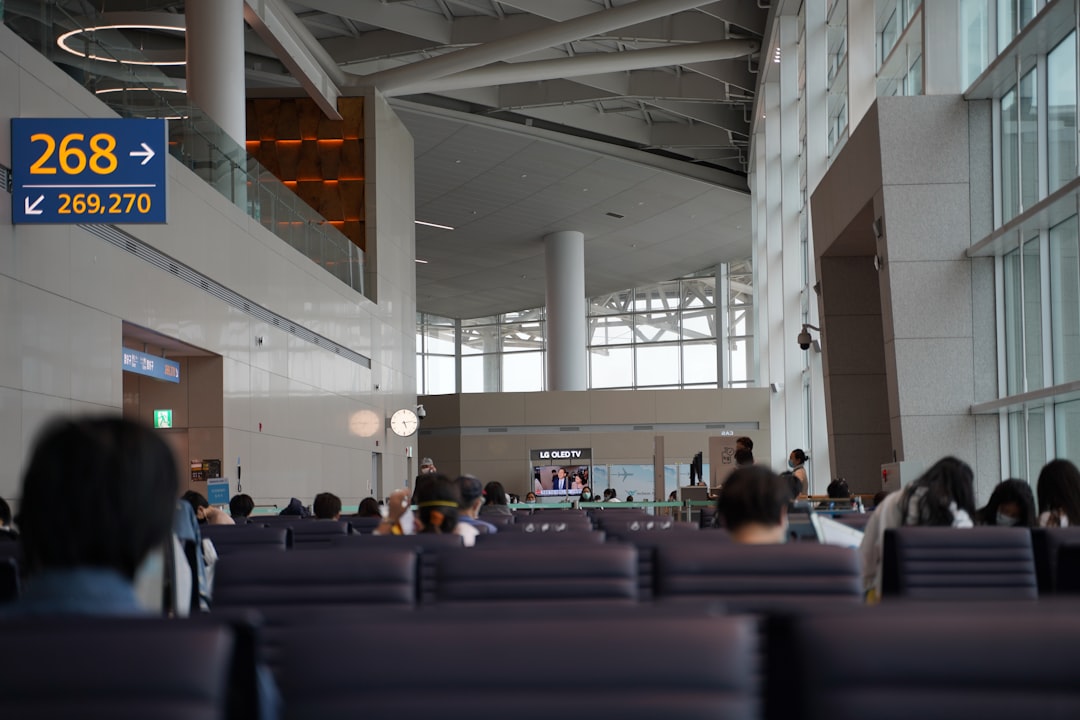
Here’s the thing that catches most first-timers off guard: Terminal 1 (T1) and Terminal 2 (T2) are not connected by a single walkway. They are approximately 18 km apart by road, and the inter-terminal shuttle bus takes around 15–18 minutes — not counting the time to find the bus stop on Level 1 of either terminal.
In 2025, the terminal split looks like this:
- Terminal 1 (T1): Most international airlines including Cathay Pacific, Delta, United, Singapore Airlines, Emirates, Qantas, and low-cost carriers (LCC) like Jeju Air, Jin Air, T’way Air.
- Terminal 2 (T2): Korean Air, Delta codeshares on Korean Air metal, Air France, KLM, Garuda Indonesia, Xiamen Airlines — and since late 2023, expanded with additional partner carriers.
- Concourse (attached to T1): Reachable via an underground automated people mover (APM) in about 6 minutes; used by several Star Alliance and SkyTeam carriers for specific gates.
The rule of thumb: always verify your terminal at booking confirmation stage, not at check-in. If you’re connecting from a T1 arrival to a T2 departure, budget at minimum 90 minutes. Korean immigration officers I’ve spoken with informally suggest 2 hours if you’re unfamiliar with the layout.
AREX: The Express Train That Actually Makes Sense (With Caveats)
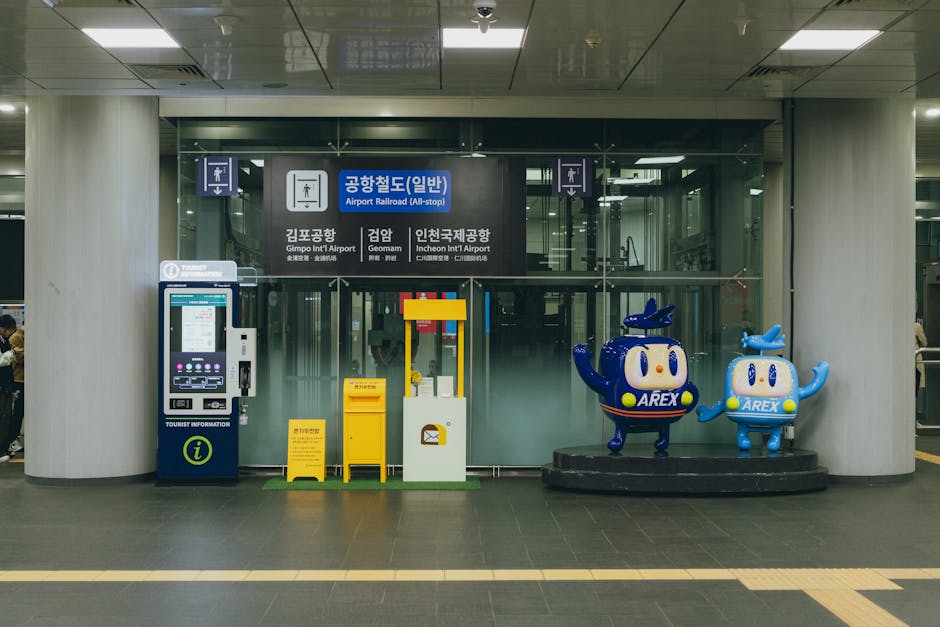
The Airport Railroad Express (AREX) is genuinely excellent — when you use it correctly. There are two services running in 2025, and they serve very different needs:
- AREX Express Train: Non-stop between Seoul Station and Incheon T1/T2. Travel time: ~43 minutes to T1, ~51 minutes to T2. Fare: approximately KRW 11,000 (~USD 8.50). Runs every 30–40 minutes. First departure from Seoul Station around 05:20, last around 22:40.
- AREX All-Stop Train: Stops at 9 intermediate stations including Hongik University and Gimpo Airport. Travel time to T1: ~66 minutes. Fare: approximately KRW 4,950 (~USD 3.80). Runs every 6–12 minutes during peak hours.
The catch? If you’re staying anywhere on Seoul’s subway Line 2 corridor (Hongdae, Sinchon, City Hall area), the All-Stop train is often faster door-to-door than the Express because you avoid a transfer at Seoul Station. I’ve run this comparison personally — the express sounds faster on paper, but the additional subway leg to reach Seoul Station can eat 20–25 minutes.
One more detail for 2025: T2 now has its own dedicated AREX station at the far end of the terminal. If you’re flying Korean Air or Air France out of T2, don’t exit at T1 — ride it one more stop. Obvious in retrospect, but the signage inside the train is easy to miss if you’re not looking for it.
City Airport Terminal (CALT): The Hidden Gem for Long-Haul Transfers
This one genuinely surprised me when I first learned about it. Seoul Station and Gangnam’s COEX area both host City Airport Terminal (CALT) facilities where passengers can check in, drop luggage, and clear Korean immigration — all before heading to Incheon. That means when you arrive at the airport, you go straight to the departure gate area.
As of 2025, the Seoul Station CALT supports:
- Check-in for select airlines (Korean Air, Asiana, Jeju Air, and several international partners — confirm with your carrier)
- Baggage drop up to 3 hours before departure
- Immigration and security clearance for Korean nationals and some foreign residents
- Operating hours: approximately 05:20–19:00 daily (check station hours seasonally)
The practical benefit: if you’re connecting through Seoul and have a tight window, this removes one choke point. If you’re just starting your journey from Seoul, the CALT at Seoul Station can cut your terminal dwell time by 45–60 minutes on a busy travel day.
Bus Routes: When They Beat the Train
Most guides default to recommending AREX, but airport limousine buses are genuinely competitive depending on where you’re staying in Seoul. In 2025, over 60 bus routes connect Incheon to various Seoul neighborhoods, and fares range from KRW 9,000 to KRW 17,000 (~USD 7–13).
Key scenarios where buses win:
- Staying in Gangnam, Jamsil, or southern Seoul — Line 6009 or 6103 can be 20–30 minutes faster than a subway+AREX combo, with no transfers.
- Traveling with heavy luggage — buses load at Level 1 ground transport and stop close to many hotel clusters.
- Late-night travel — some bus routes operate until 01:00, later than AREX’s last service window.
The downside: Seoul traffic is unpredictable, and during rush hour (07:30–09:30, 17:30–20:00), buses can run 30–50 minutes behind schedule. For tight connections, always default to rail.
Layover Logistics: What to Do With 4–24 Hours
Incheon is one of the few airports in the world that makes a long layover genuinely enjoyable rather than punishing. Here’s the practical breakdown for 2025 layover windows:
- Under 3 hours: Stay airside. The T1 landside area has a Korean Cultural Street with traditional crafts and food stalls. ICN’s transit lounge access is available for purchase (approx. KRW 15,000 per hour at some facilities) or via Priority Pass.
- 3–8 hours: Consider the free ICN Transit Tour programs. As of 2025, Korean Tourism Organization runs complimentary half-day tours for transit passengers — departures from T1 Gate 6 area, covers downtown Incheon or select Seoul highlights. Book on arrival at the transit tour desk; capacity is limited.
- 8–24 hours: Exit and explore. Korean e-visas are available for 40+ nationalities on arrival, though confirm current eligibility. Budget hotels in Incheon’s Yeongjong Island area start around KRW 50,000–80,000 (~USD 38–60) for a clean, serviceable room within 15 minutes of the airport.
Common Transit Mistakes (And How to Dodge Them)
Let me summarize the failure points I’ve seen and heard about most frequently:
- Assuming all gates are in the same terminal — always cross-check your airline’s terminal assignment on the ICN website directly, not a third-party app.
- Underestimating T1 Concourse time — the APM is fast, but security re-screening adds 15–20 minutes.
- Missing the last AREX Express — if your flight lands after 22:00 and you’re heading downtown, have a taxi or bus plan ready. Kakao T (Korea’s ride-hailing app) works seamlessly at both terminals.
- Currency exchange at arrival hall rates — Travelex-style booths at the arrivals level offer significantly worse rates than Myeongdong or Hongdae money changers. Bring enough won for transport, then exchange the rest in the city.
- Not activating roaming or buying a SIM before leaving the terminal — T1 and T2 both have 24-hour convenience stores and telecom booths selling prepaid SIMs (KRW 10,000–35,000 for 10–30 day plans). Without data, navigation in Seoul gets genuinely painful.
2025 Updates Worth Knowing
Incheon has been in active expansion mode. A few developments that affect transit planning this year:
- The T2 expansion Phase 2 added new boarding gates (numbers in the 230–270 range), which means longer walks from the main T2 concourse. Factor in an extra 10 minutes if your gate is in this zone.
- Smart immigration kiosks now support automated entry for travelers from an expanded list of countries, cutting average immigration processing time from ~25 minutes to under 10 during off-peak hours.
- The Incheon–Jeju route remains the world’s busiest domestic air corridor; if connecting to Jeju from an international flight, confirm whether you’re rebooking through T1 domestic section or using a codeshare on a full-service carrier from T2.
One more practical note: the free Wi-Fi at ICN is genuinely fast (consistently 50–80 Mbps in recent tests) and requires no registration at T1 and T2 main halls. Use it to double-check your gate assignments and download offline maps before exiting.
The airport’s official app (Incheon Airport, available iOS and Android) has real-time gate notifications and indoor wayfinding — it’s actually useful, which is rarer than it should be for airport apps.
Whether you’re doing a quick connection or treating Incheon as a base to explore Seoul for a day, the key is front-loading your information rather than winging it on arrival. The infrastructure here is genuinely world-class; the main variable is knowing how to use it.
Editor’s note: If you’re planning your first transit through Incheon in 2025 and feel overwhelmed by the options — start with just two questions: Which terminal is my departure gate in, and how much time do I actually have? Answer those first, and everything else becomes a lot easier to navigate. Safe travels.
📚 관련된 다른 글도 읽어 보세요
- Why I Almost Missed My Flight Trusting Google Maps — Real 2025 Guide to Incheon Airport Terminal 1 vs Terminal 2
- Why I Almost Missed My Flight Trusting Google Maps — Real 2025 Incheon Airport Transit Guide
- Why I Almost Gave Up on Fasting — Real Talk on Intermittent Fasting Results in 2025
태그: Incheon Airport transit, AREX train guide, ICN Terminal 1 vs Terminal 2, Seoul airport layover, Korea travel tips 2025, airport transit tips, Incheon connecting flight
Leave a Reply